
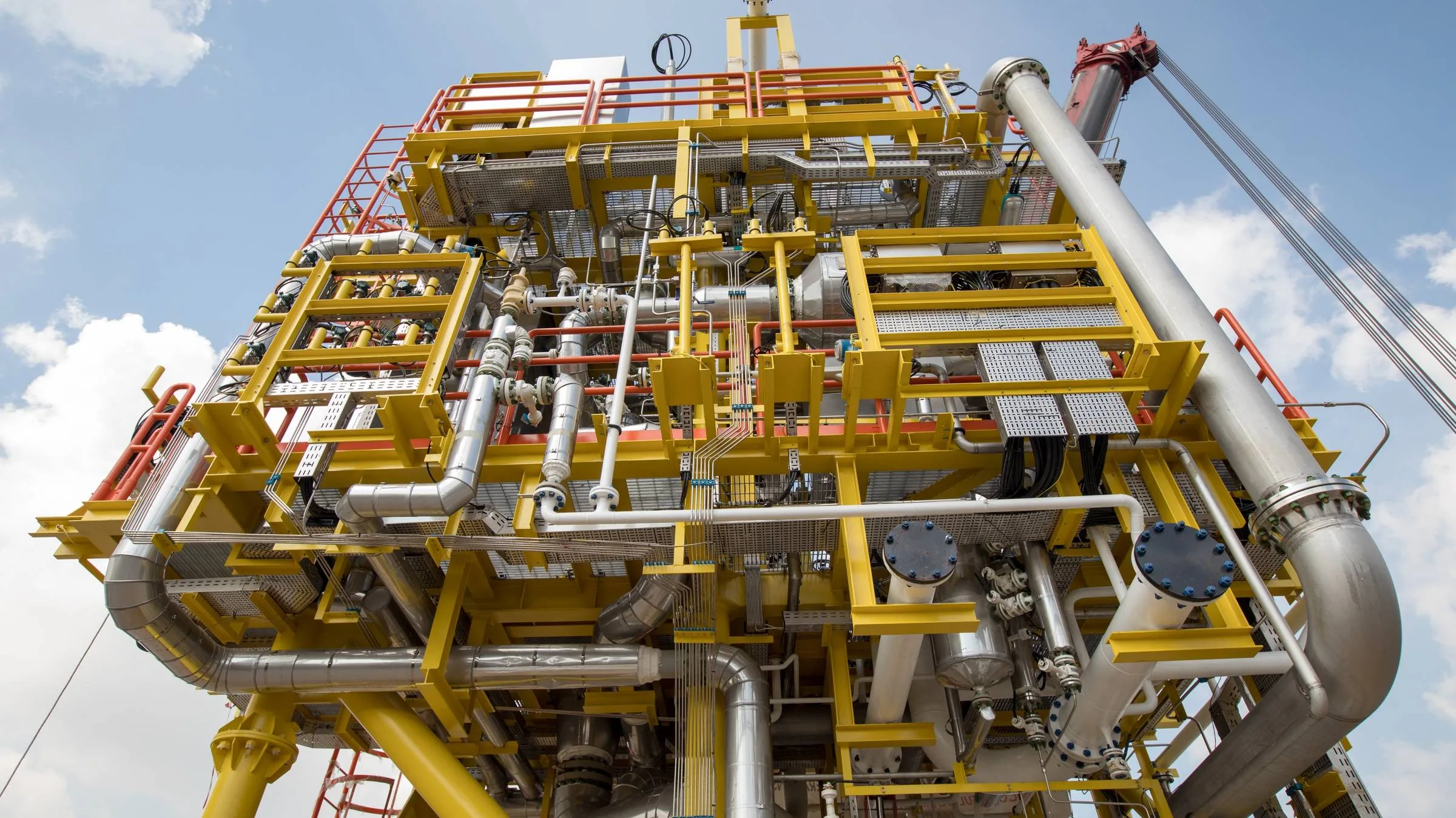
Low-pressure condensate recovery
Enhanced LP-CRS™
For low-pressure gas streams whose heavier hydrocarbons would otherwise remain in gas routed toward flare.
At a glance
Condensate recovery, proven offshore.
Overview
Recover the liquid before the gas moves on.
- What it does
- A process that recovers condensate and NGL from low-pressure gas before the remaining gas moves to its onward destination. The configuration is set per case.
- Project experience
- Three units installed offshore Malaysia between 2017 and 2019.
- Deployment routes
- Study first, engineered package, or lease where the duty supports it.
How it works
On your platform: recover the liquid before the gas moves on.
Without the unit, the heavier hydrocarbons carried in the low-pressure gas go to the flare. The Enhanced LP-CRS™ takes the gas before the existing pressure valve, recovers condensate and NGL, sends the remaining lean gas back to the flare header and the condensate to the crude. The flare stays lit.
01
Arrive
The module arrives alongside on a supply vessel. Bolted onto the low-pressure tail of the host, it is not a replacement for a gas plant.
02
Tie in
Three tie-ins: a take-off on the separator gas before the existing pressure valve, lean gas back into the flare header, and the recovered condensate into the crude.
03
Recover
It recovers condensate and NGL before the remaining gas moves onward; the lean gas still goes to the flare, which stays lit.
04
The liquid
The richer the gas, the more liquid there is to recover. It needs a destination: crude spiking, a stabiliser or storage.
An illustration of how the unit is used on a platform, not a project design. We will always tell you which configuration you are getting.
On a field
See it working on a platform.
The interactive field scene needs JavaScript. The How it works section above explains each step.
Illustration only: not a real field, not to scale, no units on screen.
At your site
What it needs on your platform.
On your platform
- A take-off on the separator gas before the existing pressure valve
- A return for the lean gas into the flare header
- A route for the recovered condensate into the crude
- Space on the low-pressure tail of the host
What it does not replace
- A gas plant: it is a bolt-on to the low-pressure tail
- Gas treating: it does not remove CO₂ or H₂S
Applications and enquiry data
Where it is used, and what to send.
Applications
- Low-pressure flare-gas recovery
- Rich associated gas
- Marginal gas volumes
- Late-life facilities
- Fixed and floating production
- Study-led retrofit opportunities
Data for an enquiry
- Gas composition through C7+
- Normal, minimum and maximum rate
- Inlet pressure and temperature
- Current gas destination
- Condensate return route
- Space, utilities and contaminants
Is it a fit?
Where the Enhanced LP-CRS™ does its best work.
Rich gas with liquid to recover.
The C3+ content is the single biggest lever, so the richer the gas, the more liquid there is to recover.
Low-pressure gas heading to flare.
It recovers condensate and NGL from low-pressure gas before the remaining gas moves to its onward destination.
A bolt-on to the low-pressure tail.
It is a bolt-on to the low-pressure tail, on fixed and floating production and late-life facilities.
A destination for the recovered liquid.
Crude spiking, a stabiliser or storage: the first thing to settle on a gas-only facility.
Good to know
The richness of the gas decides the case.
The C3+ content is the single biggest lever; below a level the screening study sets against your composition there is not enough liquid in the stream to justify the plant, whatever the gas rate.
The minimum inlet pressure depends on the configuration.
Anyone quoting a single floor without your composition is guessing.
It recovers liquids; gas treating stays separate.
It does not remove CO₂ or H₂S. CO₂ freeze-out is checked against the actual phase envelope in the screening study; high H₂S needs sour metallurgy and a sour-liquids offtake.
For pressure boosting, the answer is the Enhanced LPPU™.
The Enhanced LP-CRS™ recovers liquid from low-pressure gas; a pressure-boosting problem is a job for the Enhanced LPPU™.
Emissions benefit is quantified against your baseline, not ours.
We do not publish a percentage.
Field record
Condensate recovery offshore Malaysia.
Three LP-CRS units were installed offshore Malaysia between 2017 and 2019.
- 2016: first LP-CRS unit delivered
- 2017: first condensate from LP-CRS
- 2018: IChemE Malaysia Awards, Oil and Gas Award winner, for the LP-CRS system
- 2019: first turbo-expander LP-CRS in service
In the field
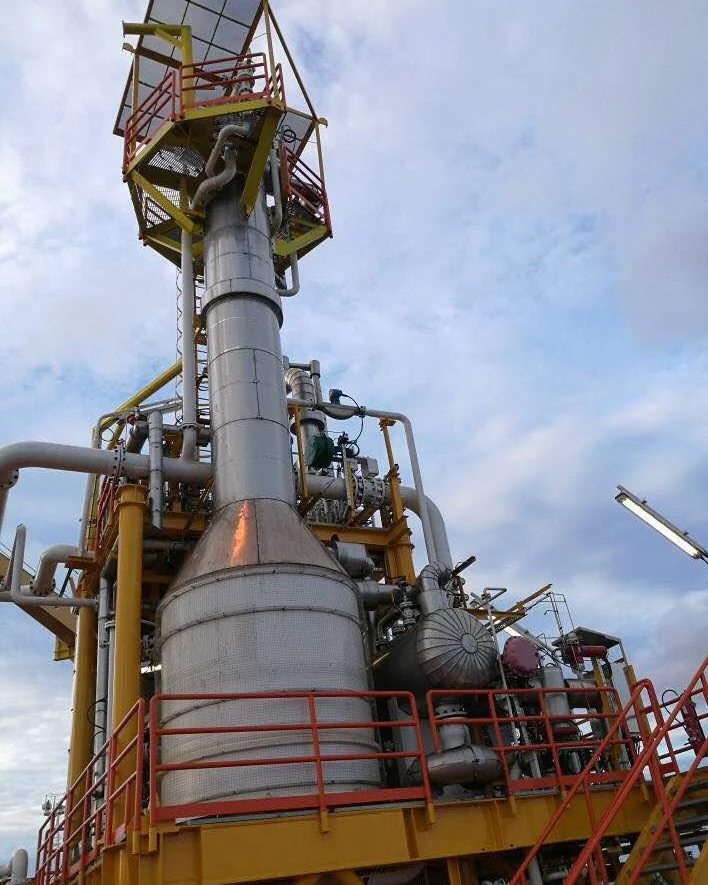
Our work, in pictures.
5 images. Select an image to see it larger.
Other technologies
One portfolio, different constraints.


Next step
Is there liquid in your low-pressure gas?
Send the gas composition through C7+, the rate range and the inlet conditions. We will tell you if it is worth a study.