
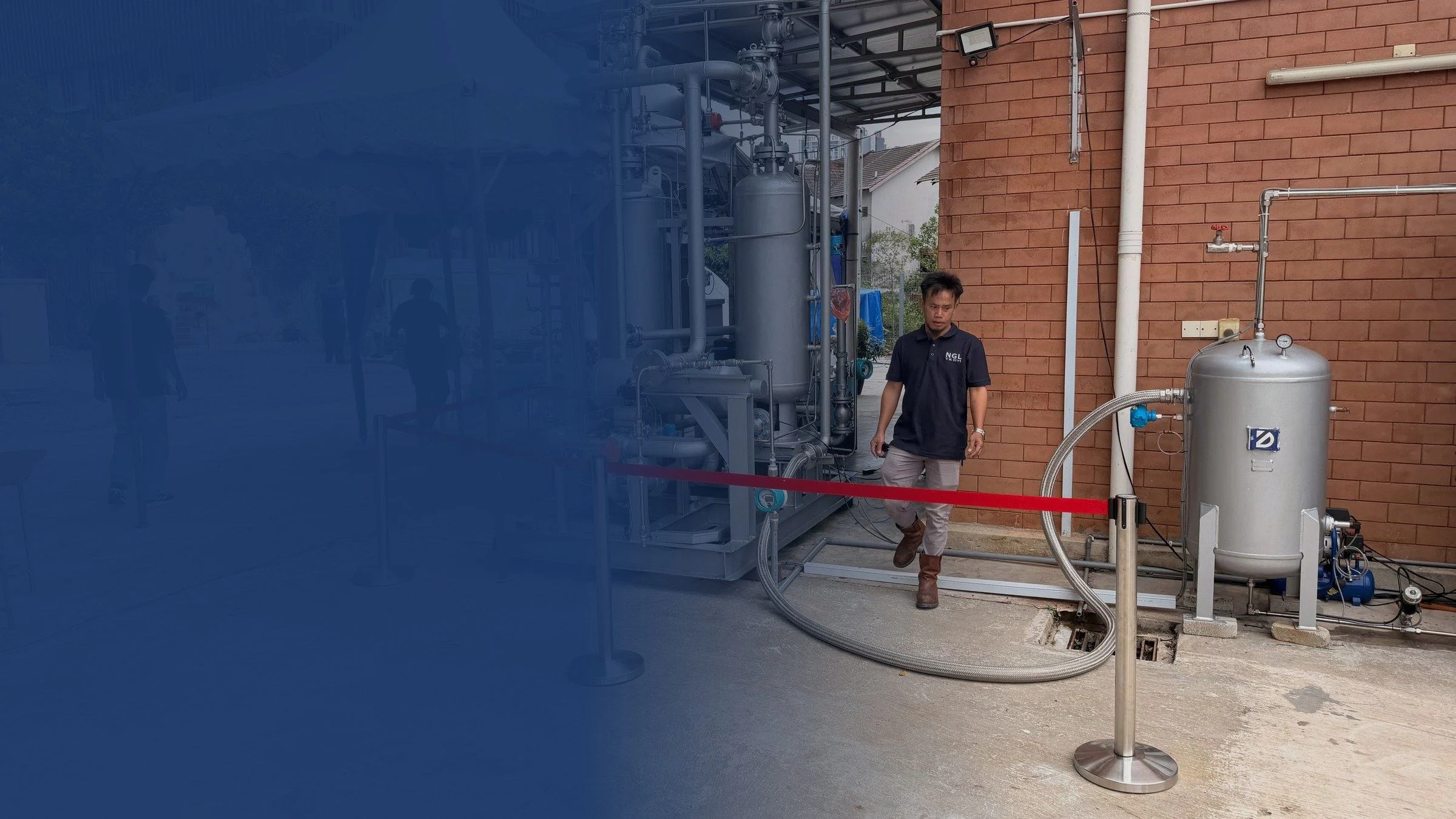
Multiphase wellhead boosting
Enhanced LPPU™
For wells that still contain producible fluids but can no longer overcome the pressure of the common production header.
At a glance
A proven platform, built to order.
Overview
A liquid piston, not a compressor.
- What it does
- A surface multiphase wellhead booster for liquid-loaded and shut-in wells. It handles gas, oil, water and produced sand together, with no gas compressor: the gas is compressed by the rising liquid column while the circulation pump moves liquid.
- Track record
- An enhancement of the field-proven LPPU platform: three offshore installations across two fields, the first in 2014 (3 facilities for PETRONAS). Units are built to order for each well.
- Deployment routes
- Service campaign, lease with support, or an engineered package.
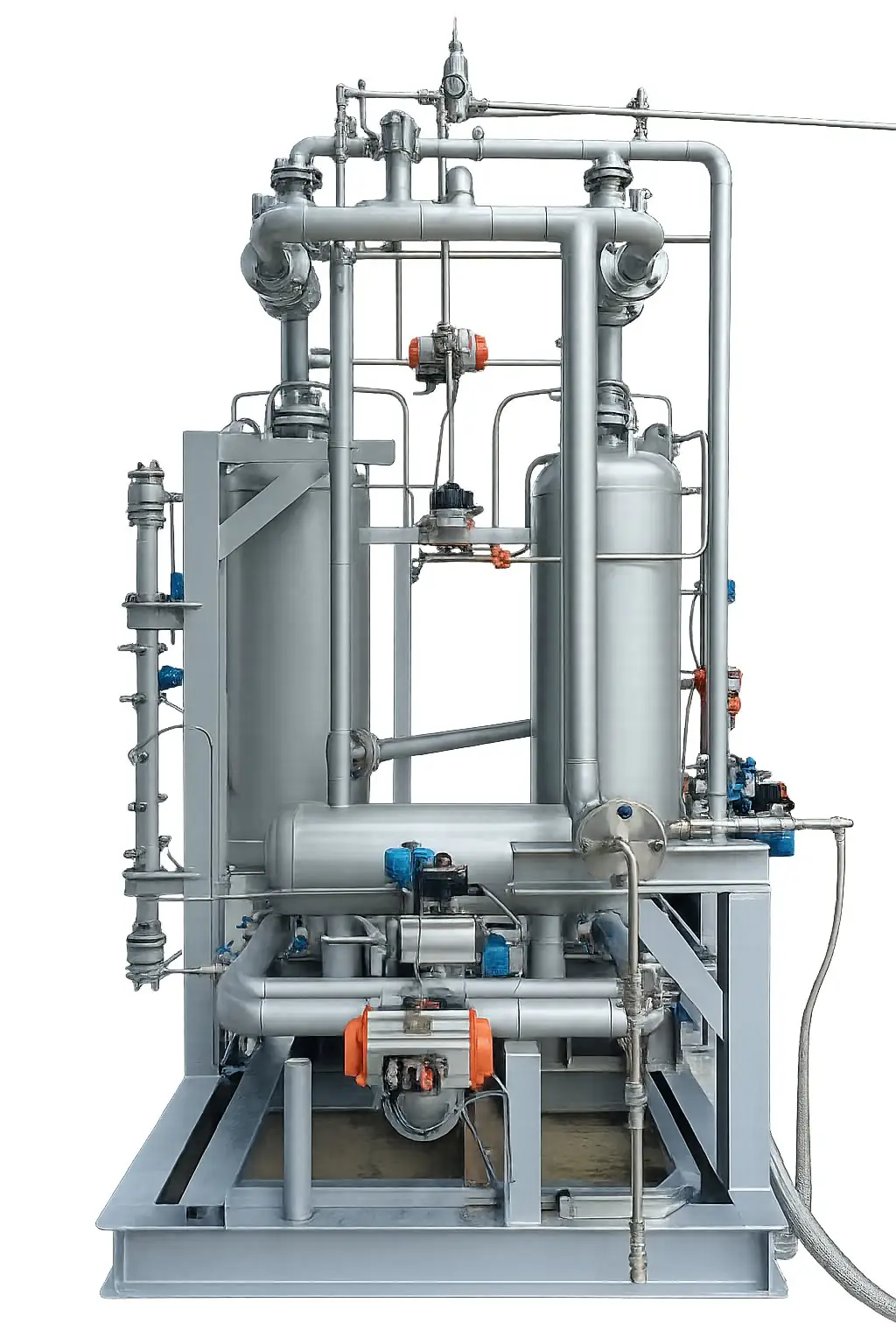
How it works
On your platform: the wells unload and keep flowing.
Without the Enhanced LPPU™, a well that has loaded up with liquid stops. It is shut in to build pressure, reopens for a short while and loads up again, so it produces only part of the time. The Enhanced LPPU™ lowers the pressure the wells work against at the wellhead: that is what unloads them, and it keeps them unloaded and flowing. It boosts the full multiphase wellstream toward header pressure, at up to about five times the suction pressure (absolute pressure ratio).
01
Arrive
A supply vessel brings the Enhanced LPPU™ alongside, and the platform crane lifts the skid onto the main deck. Units are built to order for each well.
02
Tie in
A suction spool from the test header up to the unit, and a discharge spool down into the production header.
03
Line up
The wells that need it are lined up to the unit through the test header. Each unit is sized on the field’s own data.
04
Keep flowing
Lowering the pressure the wells work against is what unloads them. On the unit they stay unloaded and keep flowing, instead of loading up and being shut in again.
An illustration of how the unit is used on a platform, not a project design. Each unit is engineered to its well and host.
On a field
See it working on a platform.
The interactive field scene needs JavaScript. The How it works section above explains each step.
Illustration only: not a real field, not to scale, no units on screen.
At your site
What it needs on your platform, and what it does not.
On your platform
- Deck space within reach of the platform crane
- A suction tie-in from the test header
- A discharge tie-in into the production header
- Built to order for each well and host
What the skid does not need
- No gas compressor
- No upstream separator
- No compressor lube or seal oil
Applications and enquiry data
Where it is used, and what to send.
Applications
- Production boosting for declining wells
- Idle-well reactivation
- Liquid-loaded gas-well unloading
- Low-pressure well testing
- Marginal-field tie-backs
Data for an enquiry
- Recent well-test and decline data
- Flowing and shut-in wellhead pressure
- Header or separator pressure
- Gas, condensate and water rates
- Composition, sand and sour components
- Space, fuel gas or platform power
Is it a fit?
Where the Enhanced LPPU™ does its best work.
The well still holds producible fluids.
It is for wells that still contain producible fluids but can no longer overcome the pressure of the common production header.
Liquid-loaded and shut-in wells.
A surface multiphase wellhead booster for liquid-loaded and shut-in wells.
Gas, oil, water and sand together.
It handles gas, oil, water and produced sand together, with no gas compressor.
Sour service and high water cut are in the standard design.
Wetted parts are duplex stainless steel for H₂S and CO₂ service on the ELPPU-300, ELPPU-500 and ELPPU-900 (carbon steel or duplex on the ELPPU-200), and any water cut within the project envelope is covered. Very dry gas wells are checked for piston-liquid make-up.
Good to know
The pump moves liquid; the liquid column does the compressing.
The circulation pump is rotating equipment. The gas is compressed by the rising liquid column; the circulation pump moves liquid.
It boosts the full wellstream.
It boosts pressure; it does not separate phases. Where the requirement is clean separated phases, the right answer depends on the duty and is set in the enquiry.
Every capacity figure states its suction pressure.
Duty falls as suction pressure falls, so every figure we quote states the suction it applies at.
Fine sand: a Sep-iSYS™ Desander goes upstream.
Where fine sand has to come out of the wellstream, the Sep-iSYS™ Desander goes upstream of the unit.
Surface boosting answers a surface constraint.
Where the well is limited by inflow, skin or downhole lift, a surface machine is the wrong intervention.
Proven platform
A proven platform, built to order today.
Enhanced LPPU™ is an enhancement of the LPPU platform: three offshore LPPU installations across two fields, the first in 2014, now re-engineered with the liquid piston. The original LPPU relied on an external motive gas supply to push liquid out of its vessel; the Enhanced LPPU needs no motive gas, because its own pumped liquid does the work. One platform, three names: the LPPU is the original platform, the Sep-iSYS™ LPPU is its name in the Sep-iSYS™ portfolio, and the Enhanced LPPU™ is the same platform re-engineered with the liquid piston, the form in which it is offered today.
- 2014: first offshore LPPU installation, offshore Malaysia
- 2016: two further LPPU packages on a second field
- Today: the Enhanced LPPU™, built to order for each well
In the field
Our work, in pictures.
8 images. Select an image to see it larger.
Other technologies
One portfolio, different constraints.


Next step
Is your well a candidate?
Send the well test, the wellhead and header pressures and the rates you have. Leave the unknowns blank.