
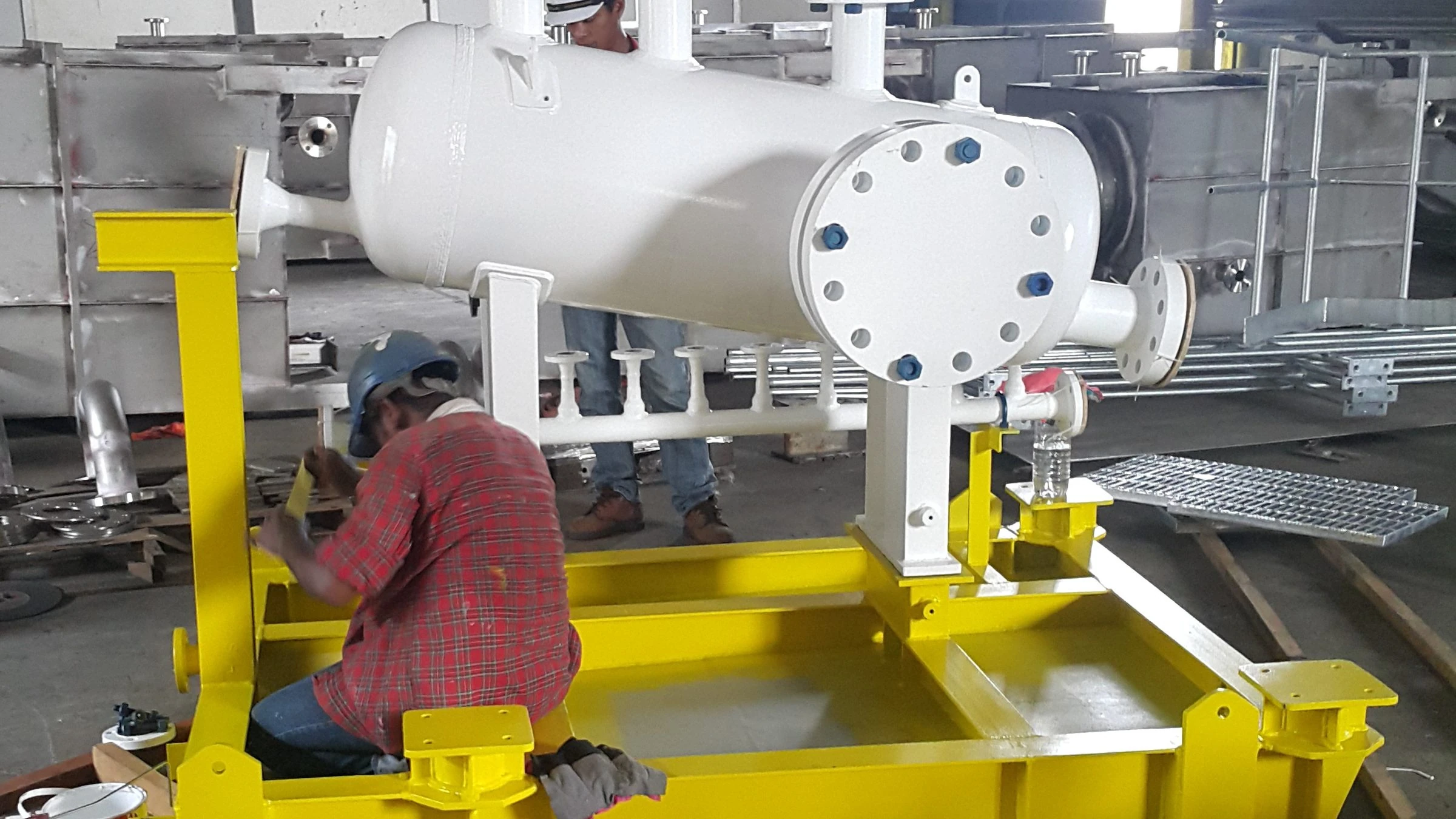
Particle-size distribution: the gate before sizing any desander.
Without a d50 and d90, no one can honestly size a desander or promise an efficiency, ours or anyone else’s.
Insight · Sep-iSYS™ Desander
Fines pass. The distribution decides how many.
The particle-size distribution sets the cut size the desander has to reach, and the basis is stated per duty. That is why it is the sizing gate: without it, any efficiency figure is a guess.
If there is no disposal route, there is no project.
The Sep-iSYS™ Desander sits in the flowline and removes produced sand from the full wellstream at line pressure, before it reaches the choke, the first bend and the separator.
Two further questions decide whether a project exists at all. The solids have to go somewhere: if there is no disposal route, there is no project. And catastrophic sand is a downhole problem; surface desanding manages a rate, it does not contain a formation failure.
If you do not have a particle-size distribution, we can test for it. With it, send the sand production rate, the gas, oil and water rates, pressure, temperature and fluid properties, the allowable pressure drop and design class, and the space and sand-disposal route.
Go deeper
See it on a wellhead platform.
The Sep-iSYS Desander page shows how it sits in the flowline and what it protects.
News & Insights
More stories.
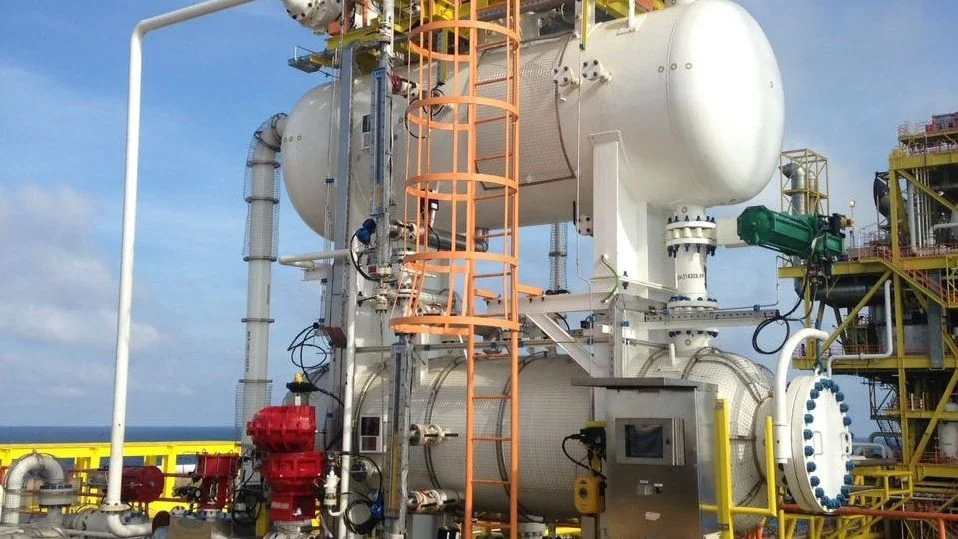
NGLTech presented at MENA Wells 2026 in Abu Dhabi
A pre-recorded film and a live, remote Q&A on idle and marginal wells: freeing the barrels that do not need a well intervention.
Read the story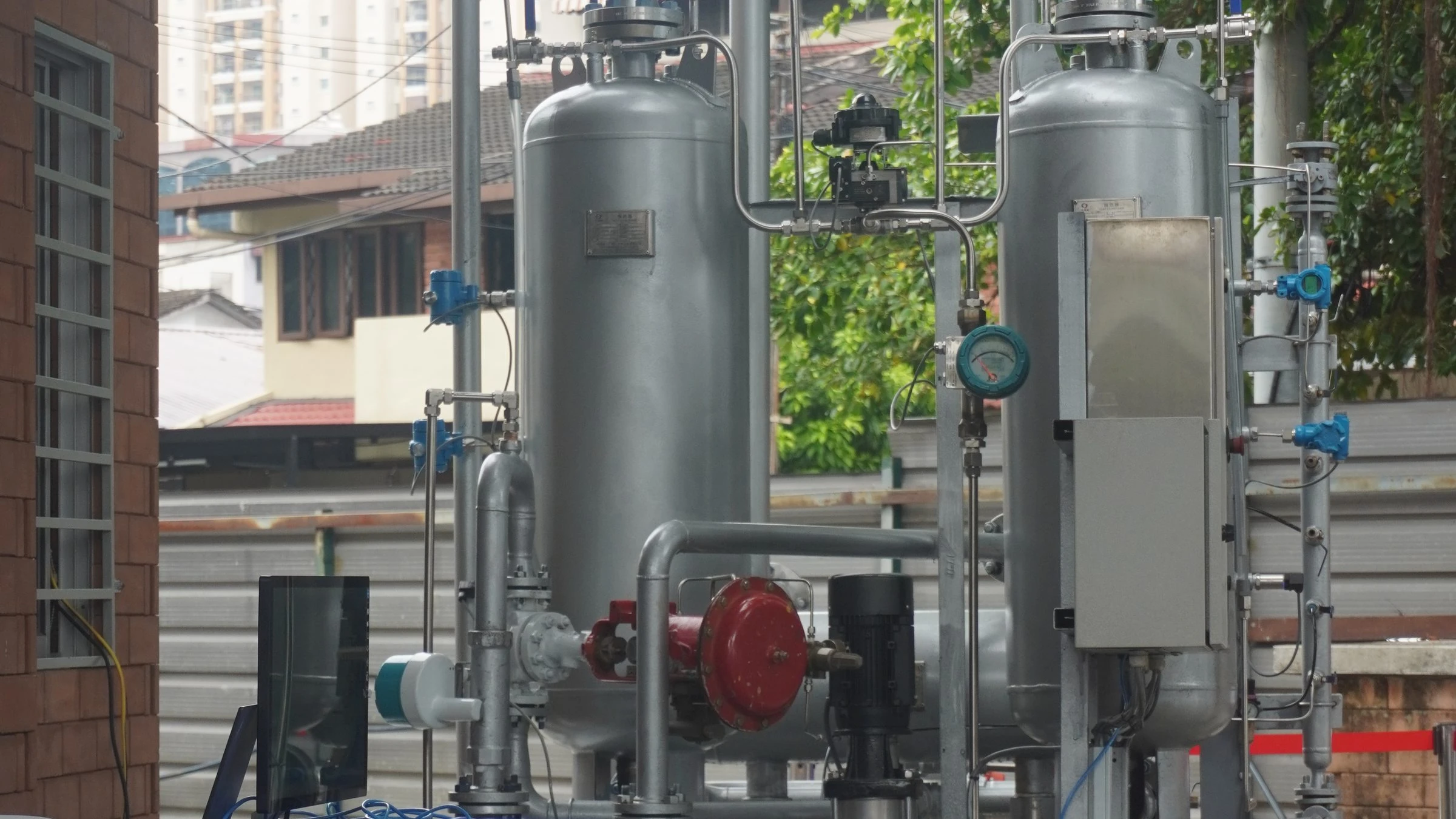
Enhanced LPPU™: a proven platform, built to order
The LPPU platform has three offshore installations across two fields, the first in 2014. The Enhanced LPPU™ carries it forward with the liquid piston, built to order for each well.
Read the story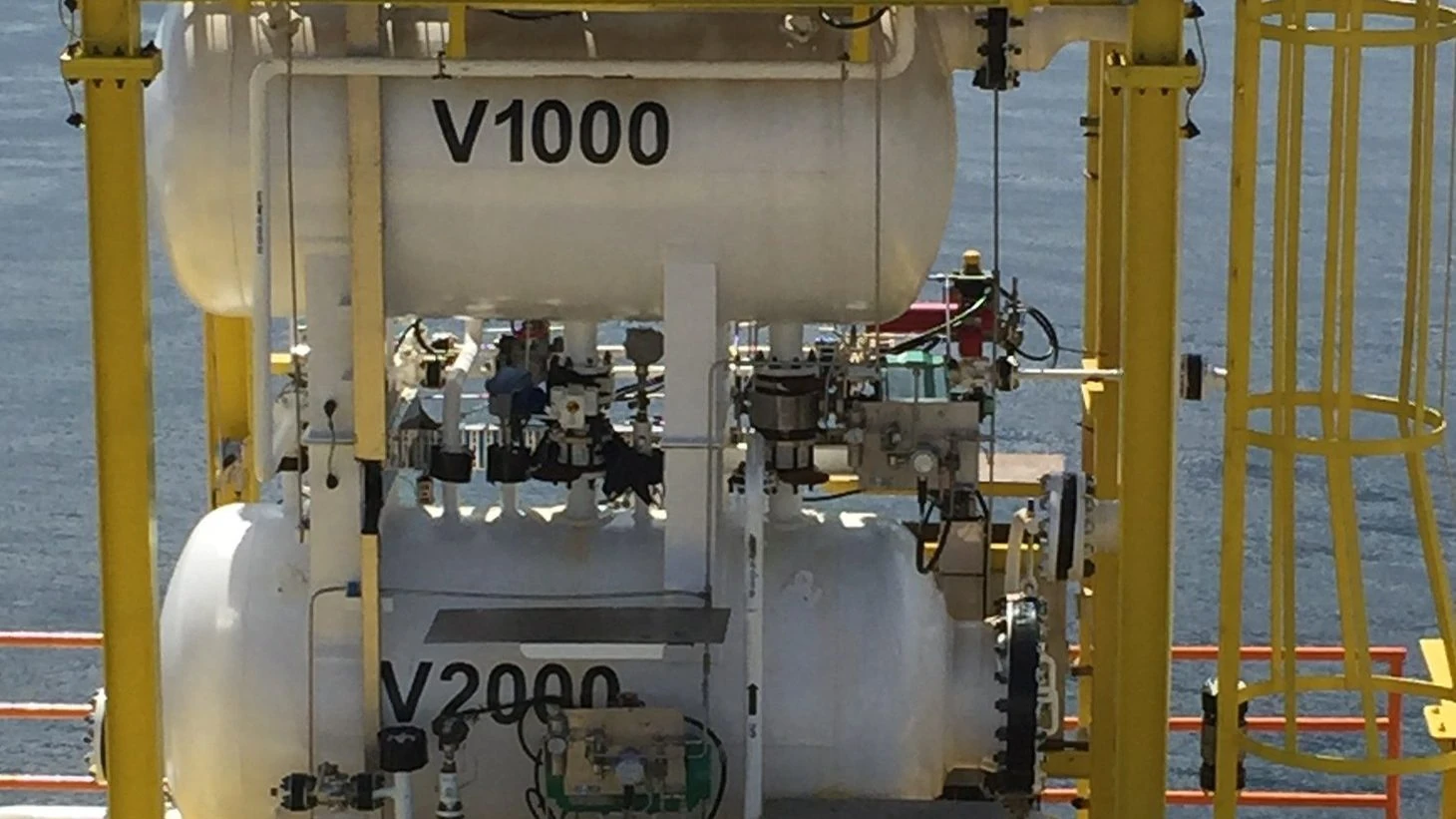
Capacity means nothing without a stated suction pressure
Why a booster’s headline number is not a screening answer, and what a credible first screen needs instead.
Read the storyScreen a candidate


